Dash

Smart Contracts Written To Be Audited

Tokens, vesting, staking, escrow and custom onchain logic in Solidity and Rust — tested with invariants and fuzzing, optimised for gas, and documented so auditors can move fast
300+
Smart contracts deployed to mainnet, from custom tokens to complex DeFi logic
$250M+ TVL
Secured by the onchain logic we've written and maintained
4 years
Shipping reliable code through bear and bull cycles

/Why DESH for Smart Contracts/

Code Written To Be Read
Why teams with something at stake don't hand this to a generalist
State what must never happen, then hunt for it
Invariants Before Implementation

Happy-path tests confirm what you already believe; they find nothing

We define the protocol's invariants up front and fuzz against them, so the suite searches for the failure instead of the success

The first real edge case then shows up in CI, not on mainnet where it is expensive

Every privileged action has a name and an owner
An Explicit Permission Model

Access control scattered across modifiers means nobody can answer who can do what

We define roles, timelocks and emergency powers as a documented model before implementation, so integrators and auditors can read it in one place

That model is the first thing an integrator reads before they trust you with their users' funds

Profiled, not discovered after launch
Gas As A Design Decision

Unnecessary storage writes are a tax your users pay on every interaction

Hot paths are profiled and optimised during the build, and the tradeoffs are written down rather than assumed

Where a cheaper structure would cost clarity or safety, we say so instead of quietly taking it

/What We Build/

From A Single Token To A Multi-Module System
The onchain scope, covering distribution, protocol logic, the testing that proves it and the lifecycle after deployment
01
Token Contracts
ERC-20, ERC-721, ERC-1155 and ERC-4626 implementations, designed to behave correctly across bridges and integrations.
02
Vesting & Distribution
Cliffs, linear release, Merkle airdrops and presale mechanics, with schedules that survive an unlock without a manual fix.
03
Protocol Logic
Staking, escrow, treasury and reward distribution built from your mechanics rather than adapted from a reference fork.
04
Governance & Timelocks
Voting, delegation, timelocks and multisig integration, so upgrade power is constrained in a way users can verify.
05
Testing & Security
Foundry unit, fork and invariant suites, fuzzing, a documented threat model and an internal pre-audit review.
06
Deployment & Lifecycle
Deterministic scripts, verified sources, safe proxy storage layouts, monitoring and an upgrade runbook your team can follow.

/Where we step in/

Writing and hardening onchain logic at every stage, from a first token to a system that already holds value
card image
For early-stage products
  • Token & vesting contracts
  • Presale and claim mechanics
  • Testnet deployment & iteration
  • First security review
First token,
presale,
testnet
card image
For scaling products
  • New modules on live contracts
  • Gas optimisation & refactoring
  • Invariant suites for existing code
  • Audit preparation & remediation
Live code,
new modules,
audit prep
card image
For ecosystem players
  • Governance & DAO contracts
  • Multi-chain deployment strategy
  • Upgrade runbooks & timelocks
  • Ongoing monitoring & maintenance
DAO,
multi-chain,
long-term ops

/Cases/

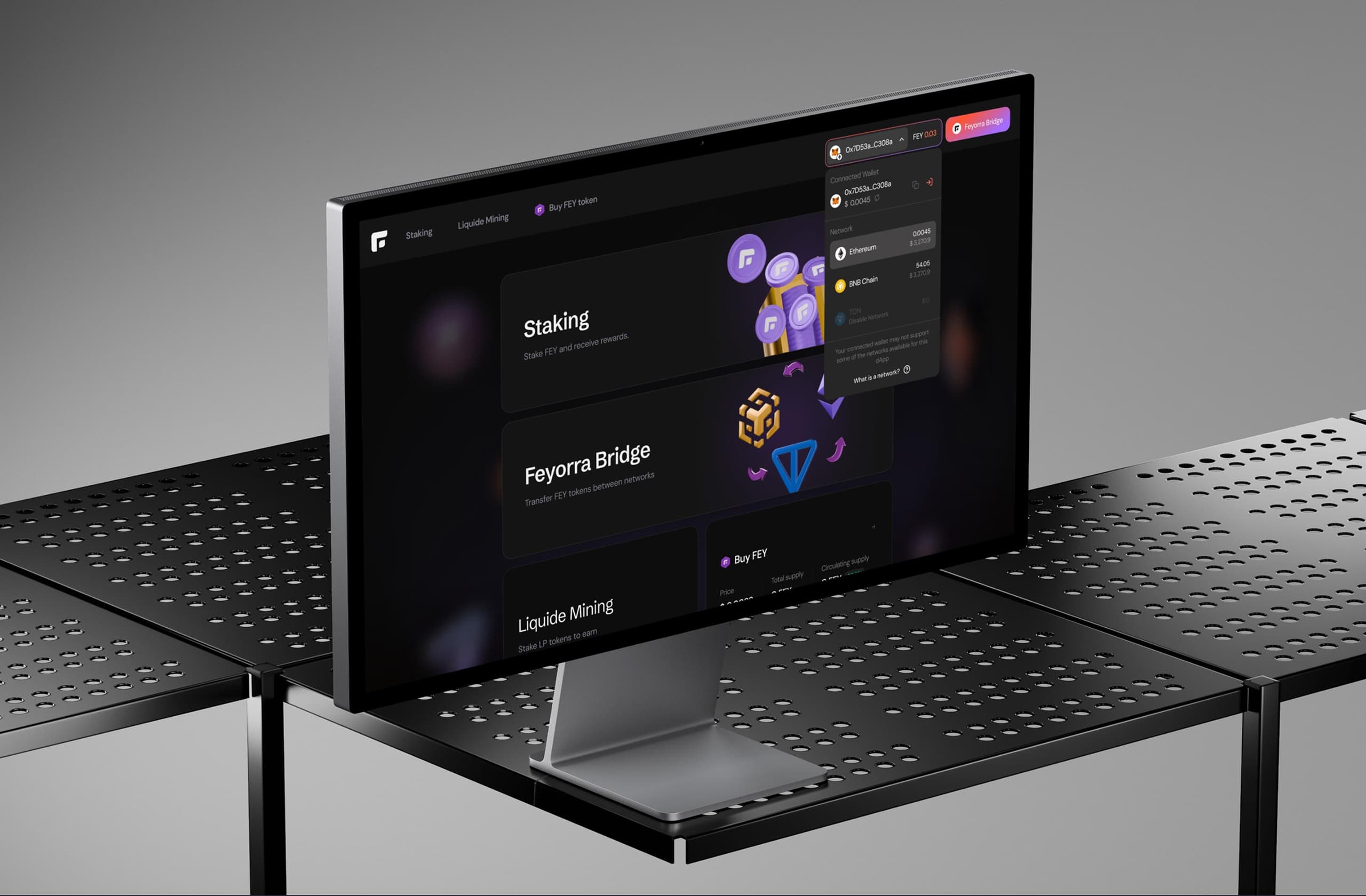
feyorra — dApp
aphone — cloud-phone
kaspa — De-Fi Platform

/Clients/

Client

Froggik

"DESH Team maintained effective communication throughout the project."

Thanks to DESH Team's work, the client saw increased product recognition within the cryptocurrency community. The team managed the...

Viktoriia Bernatska

Co-Founder

ChainCrafters

"I liked their corporate policy and how they turned to customers and their wishes."

DESH Team delivered the project on time, effectively improving the site's UX and flow. The team took the time to understand the cl...

Kolya Vovkun

CEO, Founder

Dropshipping

"I really like how they treat their clients."

DESH Team successfully completed all deliverables; the branding was a great fit for the client's company, and the website was done...

Tetyana Yarchak

CEO

/FAQ/

FAQ’s

Solidity for Ethereum and the EVM L2s, Rust for Solana-style environments, and Vyper where a project already standardised on it. The chain is usually decided by where your liquidity and users already are — we treat it as a constraint on the design rather than a preference.

We do, and the test suite ships with the contracts. That means Foundry unit tests, fork tests against live state where it matters, and invariant tests that fuzz the properties the protocol must never violate. You get the suite, so your team can keep extending it after handoff.

Yes, and we will also tell you when you shouldn't. Upgradeability buys flexibility and costs trust — every proxy is an admin key someone has to justify to users and integrators. Where it makes sense we implement it with safe storage layouts, timelocks and a documented upgrade runbook; where it doesn't, immutable contracts with a clean migration path are the better answer.

Yes. A contract review is a common starting point. We read the deployed code and the tests, map the permission model and trust assumptions, run our own invariant and fuzz suite against it, and come back with findings ranked by real-world impact rather than by severity labels. That is not a substitute for an independent audit — it is what makes the audit worth what you pay for it.

It scales with mechanics, not with line count. A token with vesting is a small, well-understood piece of work; a staking system with governance and oracle dependencies is a different order of complexity. Every engagement starts with a scoping phase that produces a fixed scope and a fixed estimate before production begins.

left
right
cta background
Ready to ship contracts, you can defend?
Let's define the permission model, the invariants and the upgrade path before the code is written — so the audit confirms your design instead of rewriting it