Dash

DeFi Development That Survives Real Liquidity

We build lending markets, staking systems, AMMs and yield vaults — with the economic math, oracle design and audit trail that let a protocol hold serious TVL
$250M+ TVL
Running through the DeFi protocols and infrastructure we've engineered
300+
Smart contracts deployed to mainnet, from custom tokens to complex DeFi logic
4 years
Shipping onchain finance through bear and bull cycles

/Why DESH for DeFi Development/

Built For Money That Moves
Why protocols with real TVL pick us over a generalist Solidity shop
The parameters decide whether the code matters
Economics Before Code

Most DeFi failures are not zero-days — they are forked parameters nobody re-modelled for a different asset

We model interest curves, collateral factors and liquidation thresholds against your real market depth before a line of Solidity is written

That means the mechanics are defensible to an auditor, an integrator and a risk committee, not just to a testnet


No single quote should move a protocol
Oracles Treated As Attack Surface

A thin market and a single price feed is the cheapest exploit in the industry

We layer feeds, add TWAP fallbacks, sanity bounds and circuit breakers, and document what the protocol does when a source disagrees

Risk parameters get re-checked when the market backing them changes, not only on the day the protocol launched

Security work runs with the build, not after it
Audit-Ready By Default

Invariants are stated up front and fuzzed, so the tests hunt for the failure instead of confirming the happy path

Auditors receive a threat model, an invariant suite and a documented permission model

They spend their time on real edge cases, which is the only way an audit is worth what you pay for it

/What We Build/

The DeFi Scope, End To End
Protocol mechanics, the contracts that enforce them, and the interface and infrastructure that make them usable at volume
01
Lending Markets
Borrow and supply markets with modelled interest curves, collateral factors and liquidation engines that stay solvent under stress.
02
Staking & veTokens
Staking, restaking and lockup systems where the reward schedule is tied to behaviour the protocol actually wants to keep.
03
AMMs & Liquidity
Swap pools, concentrated liquidity and routing logic, with the fee and slippage math profiled for gas on every hot path.
04
Yield Vaults
Auto-compounding strategies and ERC-4626 vaults with accounting that survives partial withdrawals and strategy migration.
05
Oracles & Risk
Layered price feeds, TWAP fallbacks, circuit breakers and keeper incentives that stay profitable exactly when liquidations matter.
06
Mainnet Operations
Timelocks, multisig setup, invariant monitoring and parameter tuning, so the protocol is operated rather than just deployed.

/Where we step in/

Delivering DeFi engineering at every stage, from a first mechanism on testnet to a protocol operating serious liquidity
card image
For first protocols
  • Mechanism design & parameter modelling
  • Core contract architecture
  • Testnet deployment & iteration
  • Pre-audit review before mainnet
Idea-stage,
first mechanism,
pre-audit
card image
For live protocols
  • New markets, pools and strategies
  • Gas optimisation on hot paths
  • Oracle hardening & risk parameters
  • Migration without putting TVL at risk
Live TVL,
new markets,
hardening
card image
For ecosystem players
  • Multi-chain and L2 deployments
  • Governance & treasury mechanics
  • Integrations for partner protocols
  • Ongoing monitoring & incident response
Multi-chain,
governance,
integrations

/Cases/

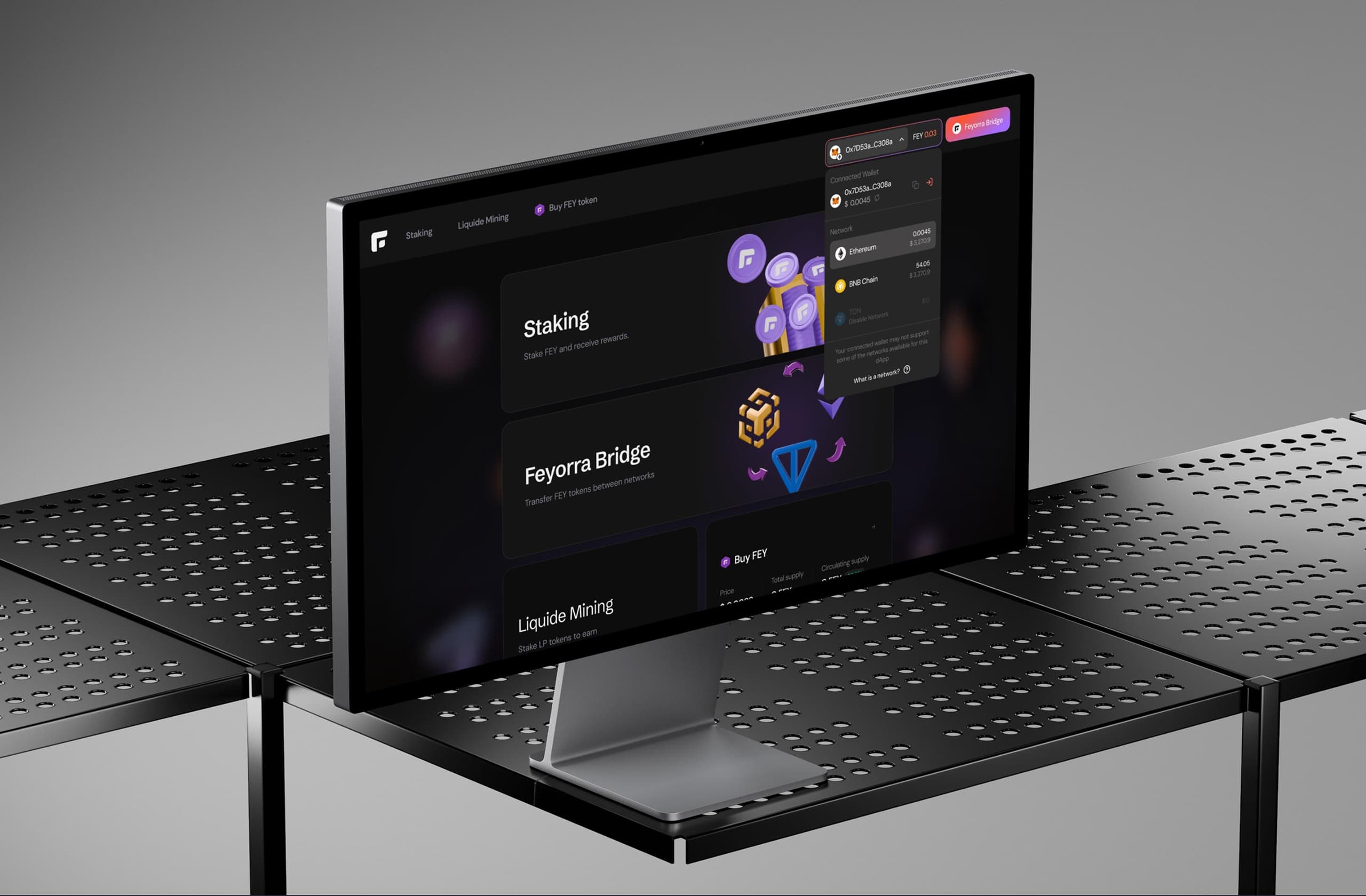
feyorra — dApp
aphone — cloud-phone
kaspa — De-Fi Platform

/Clients/

Client

Froggik

"DESH Team maintained effective communication throughout the project."

Thanks to DESH Team's work, the client saw increased product recognition within the cryptocurrency community. The team managed the...

Viktoriia Bernatska

Co-Founder

ChainCrafters

"I liked their corporate policy and how they turned to customers and their wishes."

DESH Team delivered the project on time, effectively improving the site's UX and flow. The team took the time to understand the cl...

Kolya Vovkun

CEO, Founder

Dropshipping

"I really like how they treat their clients."

DESH Team successfully completed all deliverables; the branding was a great fit for the client's company, and the website was done...

Tetyana Yarchak

CEO

/FAQ/

FAQ’s

Both. From scratch, we start with the economics — what the protocol is meant to reward and what it must never allow — and design the contract architecture from there. On an existing protocol, we start with a read of the deployed code and the current parameters, then scope changes that can ship without putting live TVL at risk.

The audit itself is done by an independent firm — that independence is the point. What we do is get you audit-ready: invariant tests, fuzzing, a documented threat model and an internal pre-audit review, so the auditors spend their time on real edge cases instead of obvious findings. We then handle remediation and re-review with the audit team.

Ethereum and the major EVM L2s (Arbitrum, Base, Optimism, Polygon) are routine, and we work in Rust for Solana-style environments. Chain choice is a design input rather than a preference: gas profile, oracle availability and existing liquidity all change what mechanics are viable, so we settle it during scoping.

As a system, not a checkbox. That means layered price sources with TWAP fallbacks, sanity bounds and circuit breakers, liquidation thresholds modelled against the real depth of your collateral markets, and keeper incentives that stay profitable in the exact conditions where liquidations matter most.

A focused module — a staking contract, a vault strategy — typically runs 4 to 6 weeks including tests. A full lending market or AMM with its own frontend and indexing layer is closer to 3 to 5 months before audit. Every engagement starts with a strict scoping phase, so the timeline is realistic before production begins.

left
right
cta background
Ready to build DeFi, that holds under load?
Let's pressure-test your mechanics before they meet real liquidity — from parameter modelling and oracle design to audit-ready contracts your users can trust