Dash
clutch rating

dApp Design Mapped To Your Contracts

Swap, stake, lend, bridge and govern — we design the interfaces for onchain mechanics so the front end never promises something the contracts can't execute
30+
Design projects delivered for onchain products
$250M+ TVL
Flowing through the protocols we've designed interfaces for
4 years
Designing onchain products through bear and bull cycles

/Our client say/

"I liked their corporate policy and how they turned to customers and their wishes."
client avatar
Kolya Vovkun
CEO, Founder of ChainCrafters
Read moreButtonDots

/Why DESH for dApp Design/

Drawn From Mechanics, Not Screenshots
Why interfaces copied from other protocols break on the first real edge case
What it needs, in what order, what it refuses
The Contract Defines The Screen

A layout copied from a reference dApp carries that protocol's mechanics, not yours

We build the interface from the contract's real behaviour — required approvals, ordering constraints, revert conditions

So the front end never makes a promise the backend can't execute

Not three screens away in a tooltip
Risk Sits Where The Decision Is

Health factor, liquidation price, lockup period and slippage impact belong next to the button, not buried for the confident user to miss

Defaults are set to protect the inattentive user, and a bad route gets a visible warning rather than a quiet execution

A user who understood the tradeoff and took it anyway does not come back angry

That's where users decide to leave
Every Non-Success State Is Designed

Pending, replaced, reverted, partially filled and insufficient allowance are designed screens, not gaps left to engineering

The component library ships with all of them, so implementation doesn't invent its own

This is the difference between a demo that looks finished and a product that behaves on a congested day

/What We Design/

The dApp Surface, Flow By Flow
The core onchain flows, the data-heavy views around them, and the system that keeps both consistent
01
Swap & Bridge
Routing, slippage and fee presentation designed so a user understands the tradeoff instead of clicking through it.
02
Staking & Rewards
Locking, claiming and reward flows where the lockup terms and the actual yield are visible at the moment of commitment.
03
Lending & Positions
Borrow, repay and liquidation management with health factors and liquidation prices surfaced where decisions happen.
04
Token Launch Flows
Presale, claim and allocation experiences designed for a moment when traffic and impatience both spike.
05
Dashboards & Analytics
Portfolio, protocol and TVL views with data density that stays readable on a phone.
06
Component System
A library covering every transaction state, with motion specs, dev-ready documentation and design QA during the build.

/Where we step in/

Designing onchain interfaces at every stage, from a first flow to a multi-product protocol surface
card image
For early-stage products
  • First core flow design
  • MVP interface definition
  • Token claim & launch experiences
  • Prototypes for testing before build
MVP,
first flow,
token launch
card image
For scaling products
  • Abandoned-transaction analysis
  • Flow and state redesign
  • Design system expansion
  • Multi-chain interface scaling
Live dApp,
drop-off,
new features
card image
For ecosystem players
  • Complex onchain dashboards
  • Governance & DAO interfaces
  • Multi-product design consistency
  • Tokenization platform design
Infra,
DAO,
multi-product system

/Cases/

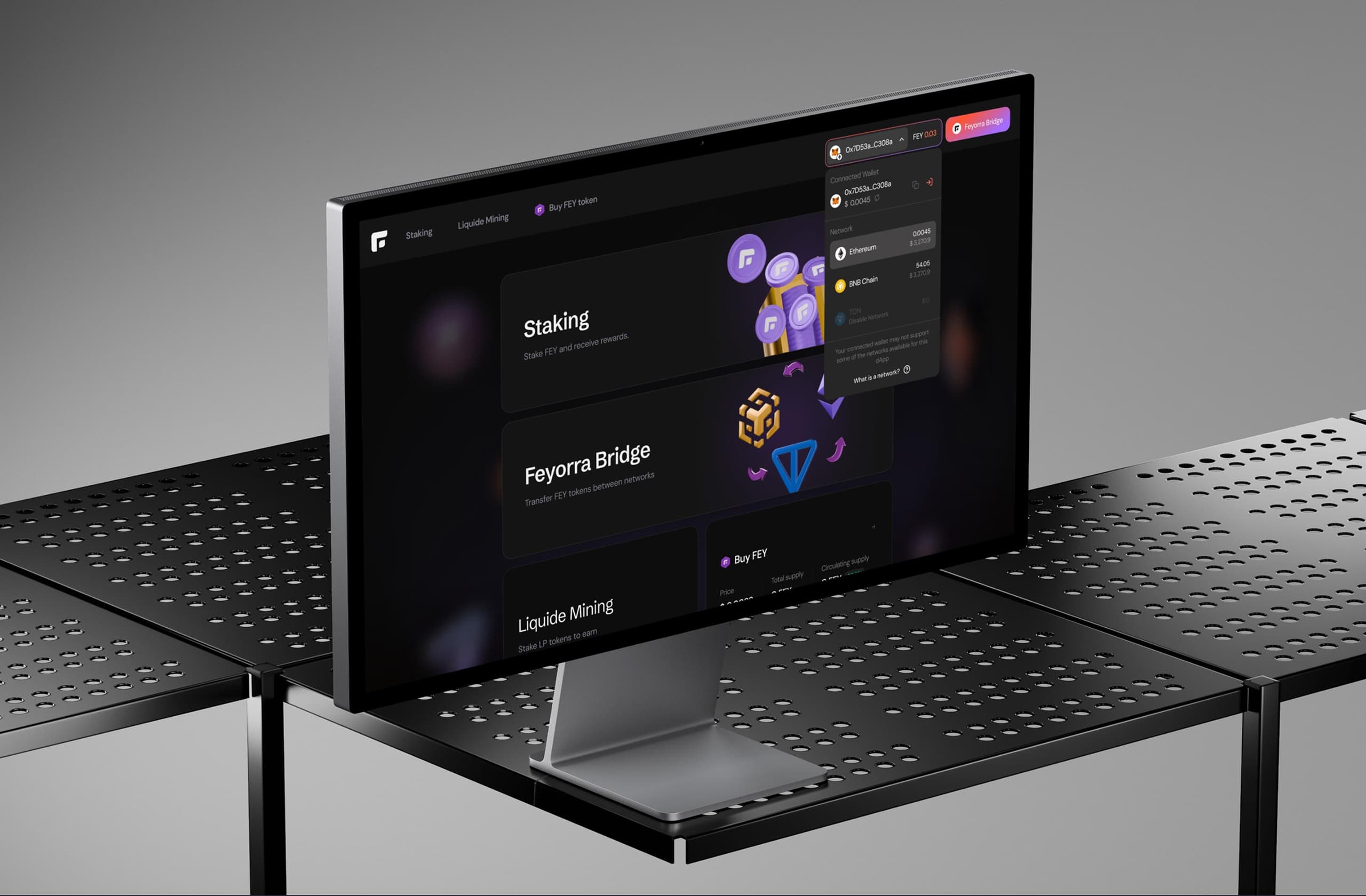
feyorra — dApp
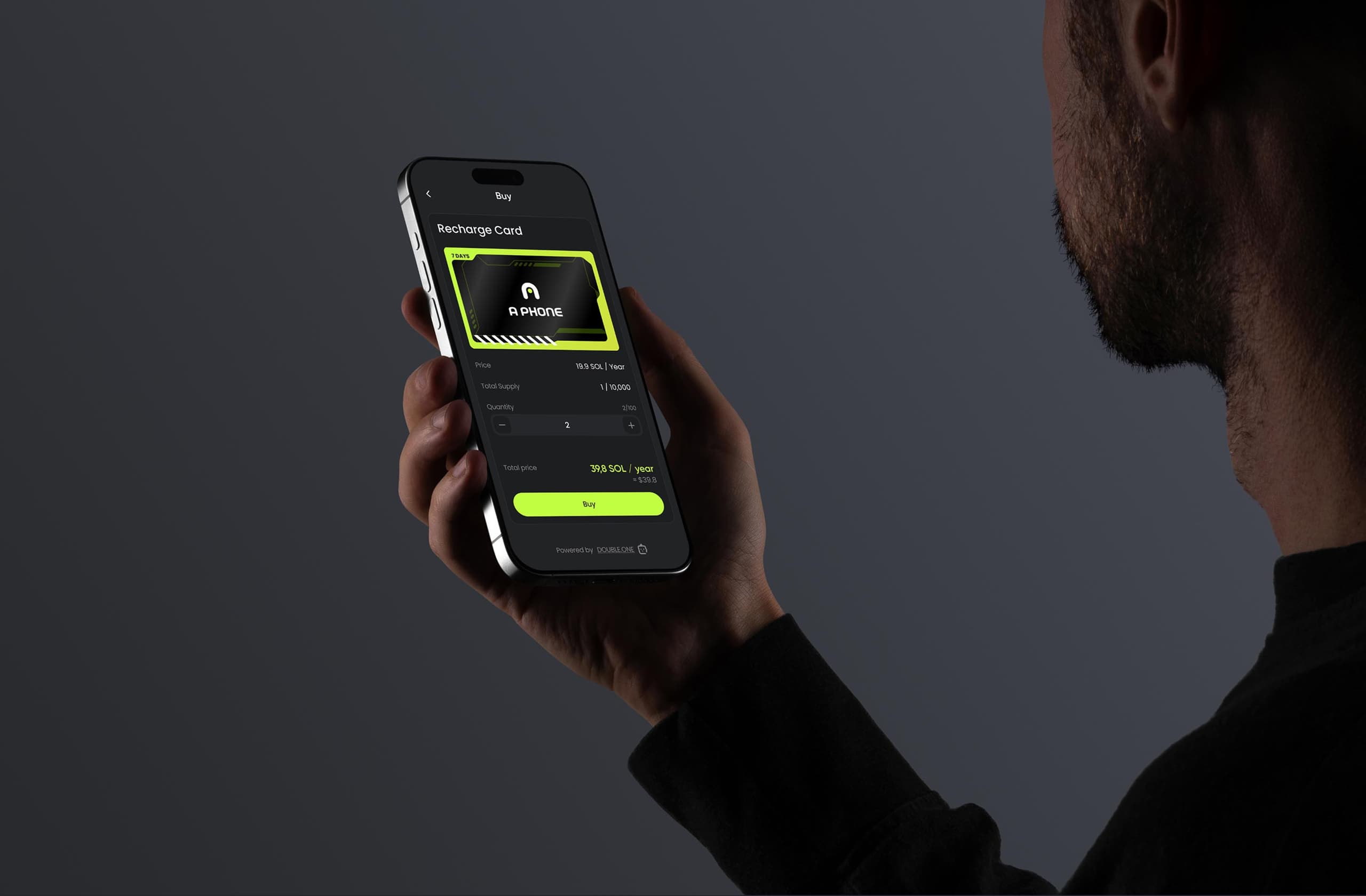
aphone — cloud-phone
kaspa — De-Fi Platform

/Clients/

Client

Froggik

"DESH Team maintained effective communication throughout the project."

Thanks to DESH Team's work, the client saw increased product recognition within the cryptocurrency community. The team managed the...

Viktoriia Bernatska

Co-Founder

ChainCrafters

"I liked their corporate policy and how they turned to customers and their wishes."

DESH Team delivered the project on time, effectively improving the site's UX and flow. The team took the time to understand the cl...

Kolya Vovkun

CEO, Founder

Dropshipping

"I really like how they treat their clients."

DESH Team successfully completed all deliverables; the branding was a great fit for the client's company, and the website was done...

Tetyana Yarchak

CEO

/FAQ/

FAQ’s

No, but we do need to know what they will do. We work from the intended mechanics — what a call requires, what it can revert on, what state it changes — and design against that. In practice the design pass often catches mechanics problems while they are still cheap to fix.

Yes. Design and engineering sit in the same team here, so the handoff is internal rather than a document thrown over a wall. Teams that want both usually run design and our dApp development service as one engagement with a single timeline.

As designed moments rather than obstacles to hide. Approvals get explained where they happen and, where the contracts allow, replaced with permit signatures. Slippage gets a sane default, a visible impact estimate and a clear warning when a route is bad. The goal is a user who understands the tradeoff, not one who clicks through it.

Frequently, and it starts with data rather than opinion. We look at where sessions end, which transactions get abandoned after simulation, and which support questions repeat — then prioritise the flows that are actually costing you users and ship changes in slices.

A single flow — a swap, a staking module — is typically 2 to 3 weeks. A full protocol interface with dashboards and a component system runs 8 to 12 weeks. Scoping settles the timeline before production starts.

left
right
cta background
Ready to design a dApp, around what it really does?
Let's map your mechanics to the flows users will actually take — including every state where things go sideways