Crypto wallet development in 2026: wallet types, architecture, smart wallets, security, cost, and custom vs white-label for Web3 teams.

The wallet is evolving from a simple storage place for your tokens into the identity, signing, payment, access, and onchain behavior control layer. For products built out in 2026, the wallet decisions will impact your onboarding, security, user retention, and ultimately revenue way before you think they will.
Crypto wallet development is a product, not just engineering work. The founder of a wallet project has to make a number of important decisions before a single screen is designed: the right custody model, the right chain stack, the right recovery flow for when a user loses access to their wallet, and the right build path.
The strongest wallet products in 2026 will focus on one thing: to reduce signing complexity for users while keeping full control with them. That sounds easy enough, but it isn’t.
A serious build has to balance key management, transaction construction, simulation, gas policy, chain abstraction, fraud prevention, and a user experience that does not scare off new users. If you are evaluating crypto wallet app development internally or through a crypto wallet development company, the goal is not to ship “a wallet.” The goal is to ship the right trust model for your users.
Crypto wallet development has moved on from the days of simple private key storage. Cryptocurrency wallets now do far more, including secure signing, chain connectivity, full token indexing, transaction simulation, wallet recovery, permissions and monitoring. Many wallets also include support for fiat currencies and their respective rails, as well as embedded wallet flows, and even policy-based signing for teams and institutions.
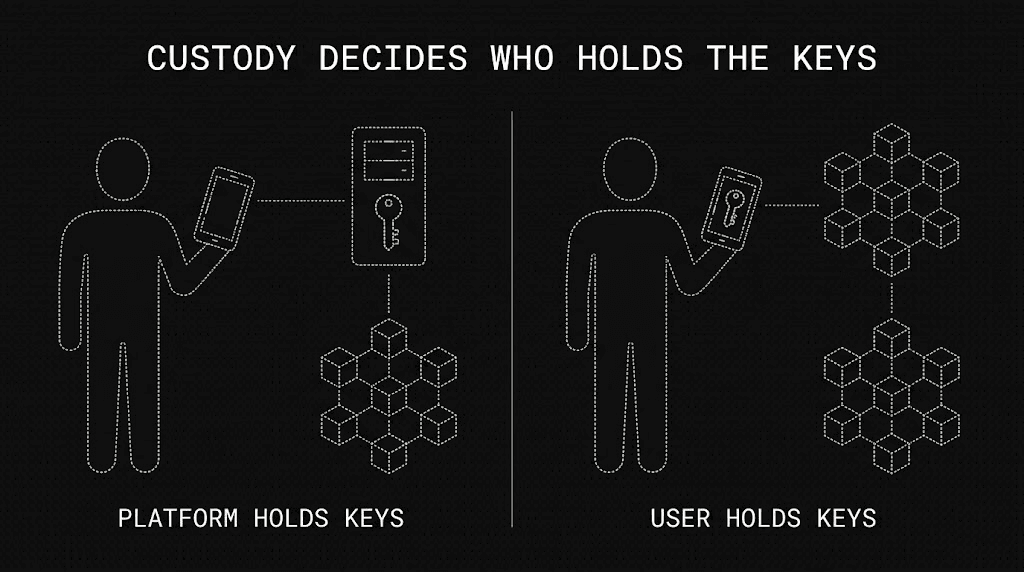
First is the point of custody for the wallet. A custodial wallet is a wallet where the control of the keys to unlock the wallet are held by a platform or service which is regulated. This could make for easier onboarding to a service, and help with recovery from a lost account. However a custodial wallet will also introduce additional operational burden to the service as well as additional compliance burden.
On the other hand, a non-custodial wallet is one where the user controls the private key, while the public key serves as the wallet address, or they hold smart account permissions. This is the default choice for the vast majority of DeFi products, for wallet-native communities, and for teams that are building products centered around self-custody.
 Hot storage (Hot Wallets) vs. cold storage (Cold Wallets) also differ. In simple terms, you can connect your Hot Wallet within apps, web browsers, and mobile devices. Cold Wallets are very isolationist in nature and are better for you to just store funds for long periods of time and use them for your treasury management, etc. A lot of products made for the average consumer have a Hot-based centered approach, and then they add support for the cold storage-based product for higher value balances.
One more shift in 2026: wallets are becoming policy engines, with smart routing, transaction previews, phishing checks, and spend limits. Also, AI crypto wallet development will fit into this new framework. AI can be very useful for wallets for risk scoring, for auto-generated support pages, and for transaction explanations, but it should not be in the signing path, and users should have full control and always be able to approve or reject a transaction.
Most teams aren’t deciding between “include a wallet in your product or don’t include a wallet in your product,” they’re deciding which wallet products will work for their business model.
The bulk of crypto wallet app development goes into making a consumer app wallet. That typically means building a mobile-first onboarding experience, a simple portfolio view, multi-currency support, the ability to do a swap, view NFTs, send push notifications, and make simple transfers. Browser-based wallets for desktop DeFi are also still being built out for power users, as well as embedded wallets for games, social products, and other apps where fast account creation is important without the seed phrase friction of a standalone wallet.
Crypto DeFi wallet development is a different kind of beast. DeFi users care less about viewing their crypto balances in a sleek interface and care more about the trustworthiness of the transactions they're signing. They want to run simulations before actually doing the transaction, they want to see the slippage as they're approving a transaction, they want approval management to inspect and revoke token allowances, and they want to be able to easily track their LP positions as well as cross-chain info. If you're building a product that frequently interacts with various protocols, then a generic wallet shell is not going to be enough.
The product shape usually follows the user profile:
A DeFi wallet also needs stronger execution tooling. That includes:
White-label crypto wallet development makes sense when going fast is more important than differentiating from others. Such a development can be suitable for pilot, market validation, for use in partner ecosystems or for internal products where the wallet user experience is not considered to be the main differentiator or so-called moat.
Custom development is typically the best option when the wallet itself is a product, maximum DeFi depth is required, or a project needs to maintain brand, security controls, and chain-specific features from day one.
| Factor | White-label | Custom build |
|---|---|---|
| Launch speed | Fast | Slower |
| Flexibility | Limited by vendor stack | Full control |
| UX differentiation | Low to medium | High |
| Security ownership | Shared or opaque | Defined by your team |
| DeFi depth | Often basic | Tailored to product needs |
| Long-term cost | Lower upfront, higher tradeoffs | Higher upfront, stronger asset value |
A practical rule of thumb could be: if the wallet experience directly affects user retention, transaction volume, or protocol usage, then build custom, and if the wallet is simply a gateway to another core feature, then white-label for phase 1.
Build processes should start with the product decisions, not code. Teams that start building a feature without first making some key product decisions tend to end up rebuilding a large part of the feature.
What drives crypto wallet development cost is complexity, not the number of screens. So a simple non-custodial mobile MVP can be relatively cost effective. However, a multi-chain DeFi wallet with smart accounts, token swaps, etc. that has a custom backend with its own indexing will be a completely different product.
To give you a rough idea of the order of magnitude of what you can expect to spend: an MVP wallet will probably cost you as much as a small product team for a few months. A full-fledged wallet for DeFi with all the bells and whistles (also back-end etc.), which runs as a full-fledged product in production, can easily become a six-figure build within a few months. People who ask how much a wallet costs to build are usually asking the wrong question. What is the feature surface and the amount of trust you get for your money?
Once the scope is defined the major cost drivers become apparent:
When choosing a crypto wallet development company to partner with for your product, treat this as a product risk decision and not as a typical vendor selection process for procurement. Look for a partner that can effectively support design, engineering, QA and launch plans all under one roof. Time and time again we see wallets fail because there are too many specialists, each responsible for a part of the user experience, and none of them owning the full user path from start to finish.
A good partner for this kind of transaction heavy product has likely shipped similar products in the past, and not just token dashboards. Press them to explain their signer abstraction, seed handling, smart wallet builds, protocol integrations, app store holdups, audit prep, and incident response. If they can't clearly explain their security model then you're probably better off looking elsewhere.
Good crypto wallet development services include product scoping, UX design, mobile and web engineering, blockchain integration, QA, monitoring, and post-launch iteration. The hardest part of building a crypto wallet is not typically any single feature. It is how all of those interact to produce secure, fast and trustworthy user experiences.
Start with the custody model, the supported chains, and the first 3 user actions that your product will support. Then define out the key management, the transaction architecture, the recovery, and the security review before you start building out the UI for the product. If you are asking how to build a crypto wallet from scratch then keep the first version of the wallet very narrow in scope as the broad wallet scope creates expensive rework.
For a crypto wallet app, design mobile flows around onboarding, signing, recovery, and keeping users informed and aware of their account via push. Native mobile security features like biometric authentication, encrypted local storage, and solid end-to-end device testing are as important as the blockchain code. A wallet app is a security product that happens to have a consumer facing interface.
Pick a provider who can explain the wallet architecture in simple terms, can show relevant launch experience and scopes the security work from the very beginning. The best crypto wallet development company for your project is not necessarily the largest one. It is the one who can map your product goals to the best custody solution, chain and other required infrastructure without over engineering the build.
The cost to develop a crypto wallet can vary depending on a few aspects including the custody model, chains integrated, features, and security. For an early stage team a minimal viable product (MVP) to test the market with a focused set of features can be quite cost effective to develop and test with. However, a production grade DeFi wallet with smart accounts and a custom backend to support the different feature sets can become a full product investment. Also note that a simple user interface to set up a crypto wallet for users can have a lot of complexity added to the back end of the application to ensure users are set up securely.
A focused product audit is usually the fastest way to cut through the confusion between building a custom solution, launching a white-label solution, or deploying a wallet with a phased roadmap. DESH Group helps Web3 teams with wallet strategy, design, development, and go-to-market. We can turn your wallet idea into a real product that people can trust and use.