For a long time, designing the tokenomics of a Web3 project felt a bit like putting together a really nice presentation slide.
For a long time, designing the tokenomics of a Web3 project felt a bit like putting together a really nice presentation slide. Founders would spend weeks agonizing over allocation percentages to make sure every single stakeholder had a piece of the pie that looked perfectly fair on paper. That beautiful distribution chart usually did exactly what it was supposed to do by getting the project comfortably through its initial funding rounds.
If you ask a Tier-1 exchange “what is tokenomics in crypto” today, their answer has nothing to do with how fair a spreadsheet looks. They immediately translate those abstract percentages into actual market depth. They are trying to figure out if your order book has the capacity to absorb the incoming supply or if the entire structure will collapse the moment those tokens start moving.
That collapse happens much faster now because the fundamental dynamic of who buys your token has permanently changed. As veteran market observer Cobie pointed out, public buyers have very little reason to participate anymore:
"The private capture of upside happened in an inaccessible way."
The everyday market participants who used to eagerly buy up new token launches have grown exhausted from stepping in just to absorb everyone else's emissions. Without that blind retail demand padding the charts, you can no longer expect community hype to mask a structurally heavy token model.
Designing a successful asset is now almost exclusively an exercise in liquidity engineering where math has to match the reality of the market. If your whitepaper requires more organic buying pressure than your market maker can actually find, the project is practically guaranteed to become a zombie asset within its first few months.
Surviving that critical first quarter requires you to build the asset with the actual trading environment in mind from day one. When working through the key features of tokenomics, every mechanism you design has to be carefully calibrated to avoid overwhelming whatever liquidity is actually available. To understand how to design web3 tokenomics that actually survive in practice, we have to look closely at the very first structural decision you make before the token even goes live.
That first structural decision you make is exactly how much supply actually enters the market on day one. For a long time, keeping the initial float extremely tight while projecting a massive fully diluted valuation (FDV) felt like a clever growth hack. It created an artificial scarcity that made the chart look incredibly strong without requiring much real capital to push the price upward.
The environment we are operating in now interprets that exact setup as a glaring warning sign. Sophisticated funds and everyday buyers have simply watched too many of these inflated structures collapse to believe they represent actual project health anymore. A microscopic starting float immediately signals that someone else will eventually be asked to absorb a massive wave of future emissions.
The mechanics behind this specific flaw were actually exposed back in 2024 when Binance Research first started digging into the underlying numbers. They highlighted that many projects were stepping into the market with circulating supplies as low as 6%, and almost nobody was willing to release more than 20%. The analysts linked this artificial scarcity directly to a looming wave of sell pressure, warning that around $155B in future unlocks was waiting to hit the broader market by 2030.
We saw exactly how buyers priced that overhang when Memento Research tracked the performance of 118 token launches throughout 2025. They found a rather bleak picture of the new reality:
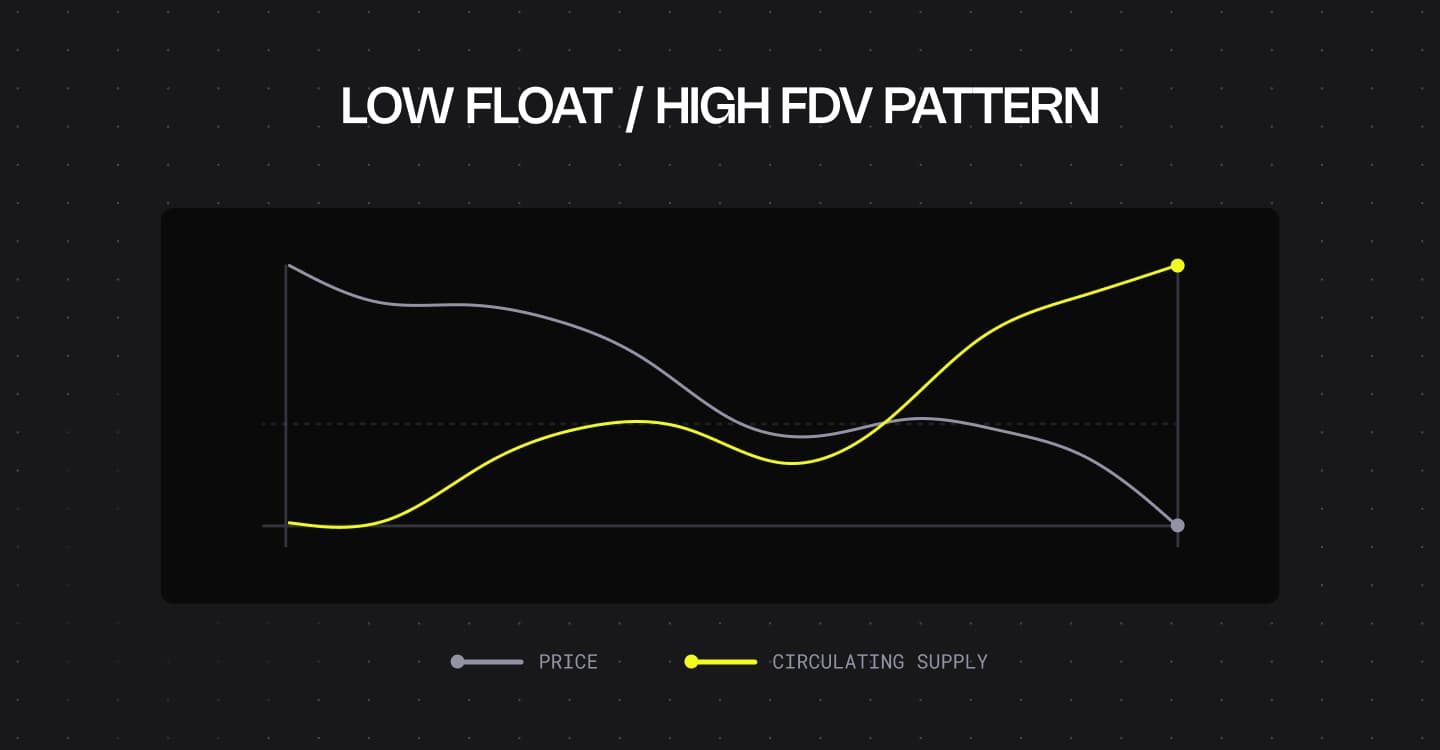
Unlike traditional equities, building sustainable tokenomics in crypto requires giving your market maker enough actual supply to establish a genuine price curve. There needs to be enough tokens available to absorb normal trading activity so the chart does not look like a fragile trap that buyers are afraid to touch. If you starve the order book on day one, your liquidity providers simply will not have the depth to defend the asset later on.
Getting that initial float right is essentially just the entry ticket to surviving your first few weeks of trading. Even with a perfectly calibrated starting supply, your market maker is going to face another immediate operational challenge. You still have to figure out exactly how the rest of your locked tokens are going to bleed into that delicate environment over time.
That is exactly where teams run into their next major operational challenge after finalizing their opening float. They spend all their energy preparing for day one and then simply hand the rest of their locked supply over to a calendar. The underlying hope is that the order book will somehow naturally figure out how to absorb all those future tokens later.
The market actually starts pricing that future pressure long before the scheduled release date ever arrives, which is why the future of tokenomics will be shaped less by pitch decks and more by how emission schedules behave in live markets. A highly predictable linear vesting schedule essentially functions as an open roadmap for traders to position themselves against your incoming supply. The chart begins carrying a permanent overhang as buyers realize a massive amount of insider tokens will systematically hang over their heads week after week.
You get a real sense of how heavily the market weighs this dynamic by looking at the sheer volume of tokens constantly hitting the order books. Back in January 2026, Tokenomist flagged a single week where participants were expected to somehow digest over $940M in routine releases. This data illustrates how normal it has become to constantly evaluate a project based entirely on its incoming emission regime.
One of the clearer examples from their tracking was LayerZero, where a single scheduled unlock pushed $42M into the market. That specific event represented a heavy 6.36% of its circulating supply and merely kicked off a relentless two-year continuous vesting cycle for those insider allocations. Watching that level of continuous future pressure weigh on the chart fundamentally changes how everyone behaves around the asset.
Aligning with the reality of the order book requires smoothing out that pressure so the market can realistically digest the new tokens over time. Dispersing the supply through a continuous block-by-block or millisecond release naturally diffuses the impact and makes it significantly harder for external actors to exploit your schedule. Giving the book a better chance to digest the flow quietly keeps the chart from turning into a public countdown.
Anticipating that kind of continuous future pressure often makes founding teams incredibly nervous about protecting their early valuation. That very natural anxiety frequently pushes them toward looking for an artificial way to hold the price up. That exact moment of panic brings us directly into the messy reality of hard-coded transaction taxes.
Implementing that specific kind of friction directly at the smart contract level feels incredibly reassuring on paper. Skimming a percentage off every transfer creates the illusion of automatically penalizing sellers while trapping more value inside the ecosystem. The trouble actually begins the moment that taxed token has to survive in a professional trading environment.
Algorithmic market makers operating at the level of Wintermute rely on capturing microscopic price differences through high-frequency trading bots. Forcing those specialized algorithms to pay a transfer fee means they will operate at a loss on almost every execution.
Because their operational model depends on high efficiency, these institutional providers usually require a zero-percent transfer fee in their service agreements. Failing to accommodate that requirement leaves your order book dependent on fragmented retail liquidity. That missing professional depth causes the chart to struggle significantly during periods of normal market stress.
That friction at the smart contract level quickly leaks into execution quality across the broader ecosystem. Major centralized exchanges often refuse to list assets carrying these transfer penalties because the tax breaks their internal wallet sweep architecture. Even primary data aggregators will flag these taxed tokens to protect their users from restrictive mechanics.
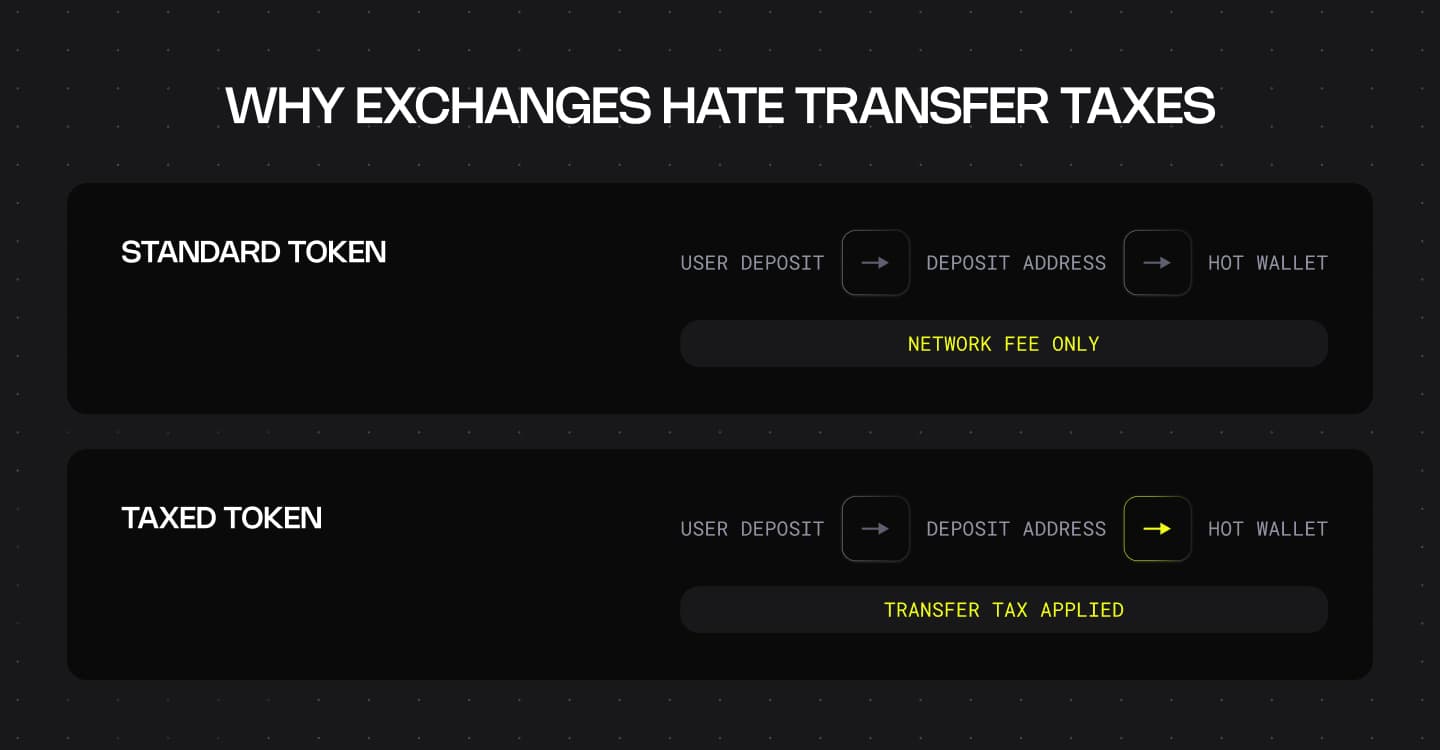
Building a sustainable market requires stripping away those penalties and finding a better way to handle the circulating supply, because the most innovative tokenomics models reduce friction instead of hard-coding it into execution. A healthy token needs a native reason to avoid flowing straight back into the order book. Giving participants an organic incentive to hold that liquidity brings us to the critical concept of designing a real economic sink.
This specific failure point usually appears during the development of tokenomics models, when the math starts becoming an execution problem. A model can look beautifully balanced inside a spreadsheet and still completely fall apart the moment it gets split across too many hands:
- One person designs the emissions logic. - Another writes the contract from their own interpretation. - The market maker is left trying to stabilize a structure they never helped shape.
This fragmented workflow is exactly where the live structure begins drifting away from the original design. The math says one thing, the smart contract does something slightly different, and the listing path inevitably adds another unexpected constraint. The market ultimately does not care which part of the operational stack caused that friction; it only sees the final result on the chart.
If the unlocks feel heavy, the liquidity feels thin, or the token utility fails to absorb supply the way the pitch deck implied, the asset simply gets judged as one broken system.
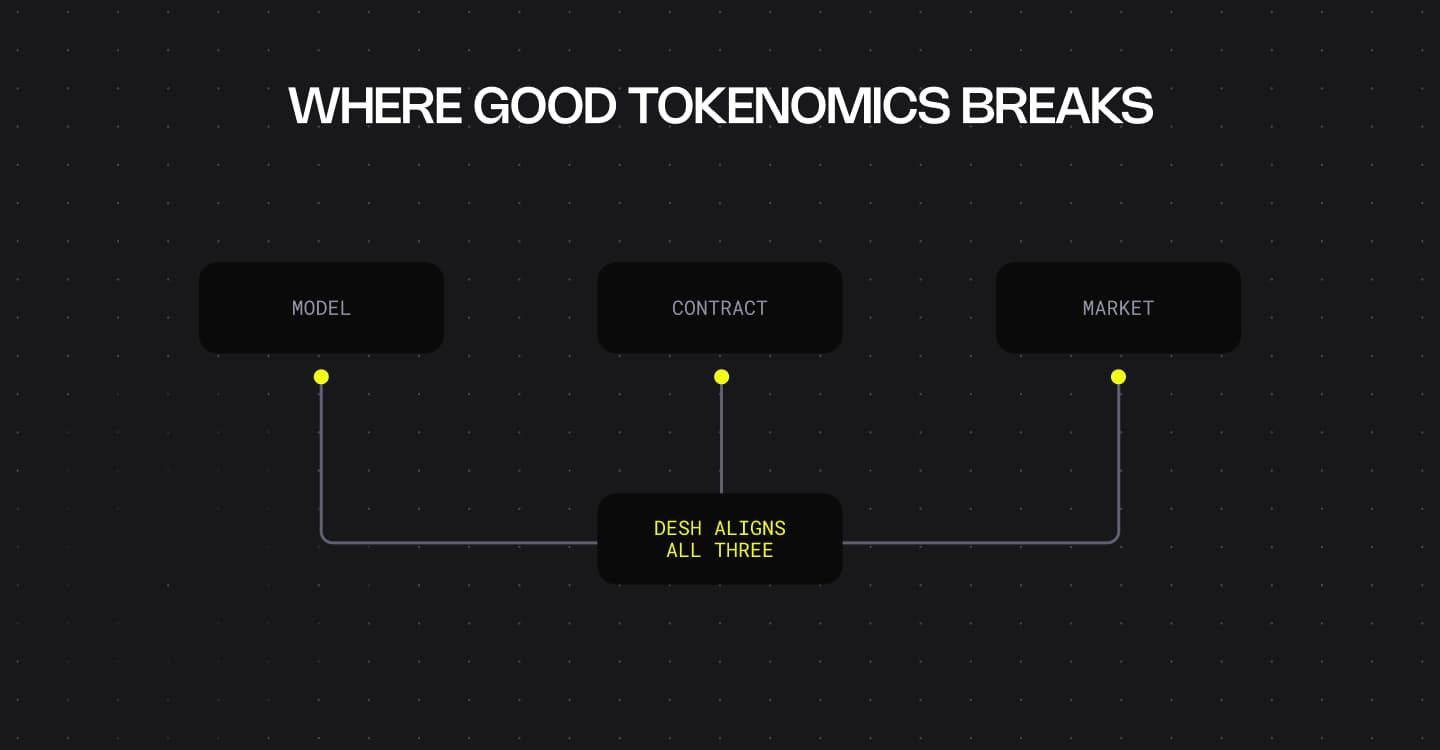
DESH exists specifically to close that execution gap before it ever turns public. We work as a single architecture layer across the economic model, the contract logic, and the market structure, because serious tokenomics in Web3 has to survive contact with code, liquidity, and counterparties at the same time.
That unified approach ensures the token that actually goes live on an exchange preserves the exact economic intent that was designed on paper. The smart contracts strictly reflect the intended economics, and the launch path is shaped entirely around real order book dynamics and liquidity constraints. The fundamental goal is to remove fragmentation before that fragmentation starts pricing itself into your chart.
You can feel incredibly confident in an Excel model and still discover too late that it only really worked in a closed tab. The real test starts when that mathematical model finally has to survive live code, counterparties, and real order flow.
Before the first line of contract code is written or the first investor call is booked, the model should be actively pushed until its weak points show up. If your current design only works on a spreadsheet, let’s stress-test it against real 2026 liquidity constraints, unlock pressure, and Tier-1 listing requirements, because that is the fastest way to see whether your web3 tokenomics models can survive outside the deck.
Drop us a message on Telegram for a short, focused audit. We will show you exactly where the supply logic, vesting structure, or liquidity assumptions are likely to break, and what needs to change before those blind spots cost you a funding round or a listing.