CoinGecko is where most token conversations eventually get audited. In December 2025 it was pulling almost 21M visits in a month, and even the mobile app has 5M+ downloads, which tells you how often people reach for it when they’re deciding whether a project is real or just loud.
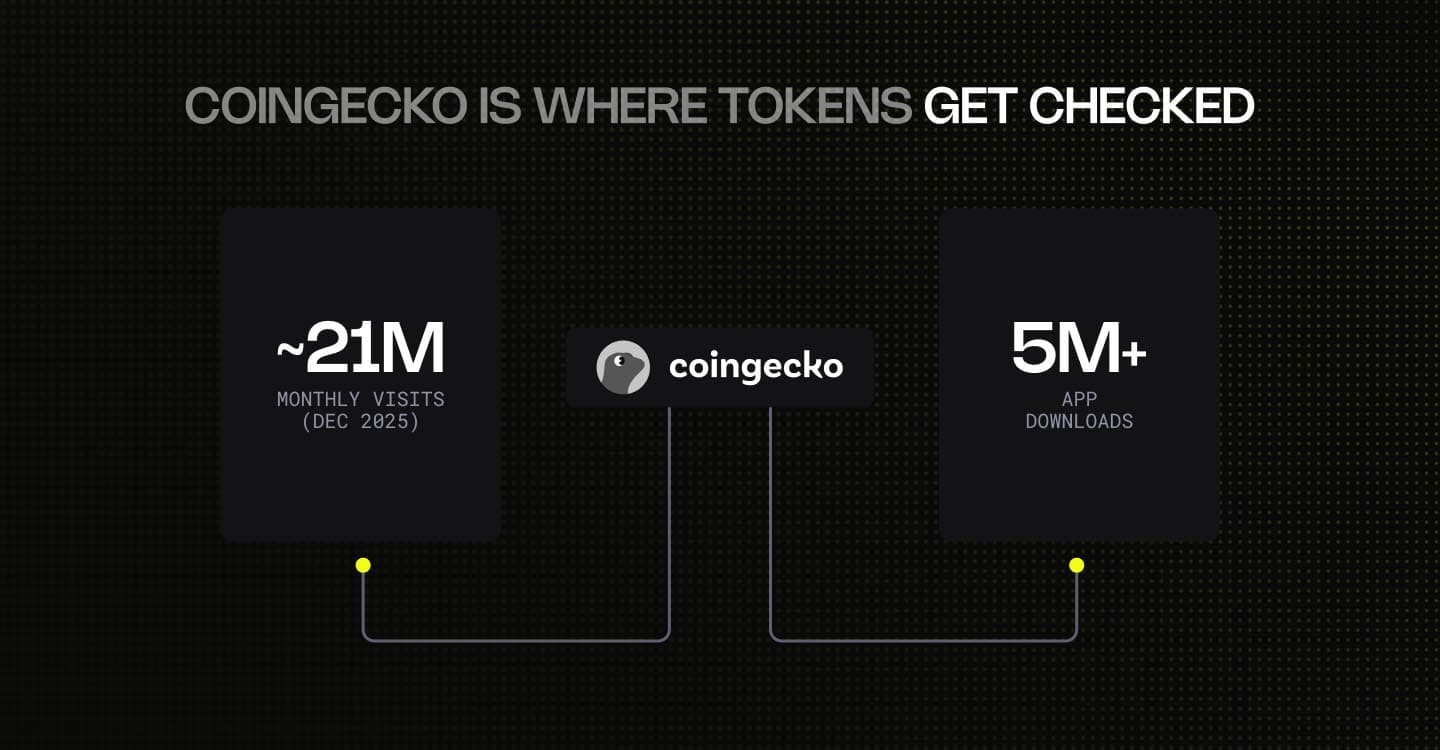
That matters because serious investors and communities use CG as a first pass for due diligence and discovery, and weak data there quietly erodes credibility long before a call is on the calendar. If your page looks inconsistent or hard to verify, it becomes one more reason to hesitate when attention is scarce and capital is cautious.
A lot of teams treat a CoinGecko listing like paperwork, then learn that review follows market reality.
CoinGecko explicitly prioritizes projects that already trade on a tracked exchange, show organic liquidity and volume, and can back up circulating supply and tokenomics with clean, verifiable disclosures.
This guide is written for 2026, grounded in CoinGecko’s current guidance and what teams are running into right now, with the goal of making the process predictable without leaning on outdated “$50k volume” folklore.
If your team is stretched thin, DESH can take over most of the heavy lifting across liquidity planning, listing strategy, design, dev, marketing, and compliance, reducing execution fragmentation so outcomes feel less random.
Before we get into the steps, it helps to be clear on what CoinGecko actually is, what it measures, and what kind of signal people expect it to provide in 2026.
CoinGecko is an independent crypto data aggregator that compiles price, volume, liquidity, market coverage, and supply context into a single public profile for each asset, so anyone can verify the basics without piecing things together from scattered sources.
In its own product positioning, it tracks 10,000+ cryptocurrencies and connects to 700+ exchanges, which explains why it has become one of the standard reference pages teams get asked to share during research.
A well-maintained CoinGecko page pays off in practical ways:
Any traded token can surface on CoinGecko over time, and the projects that benefit are the ones that keep their market data, links, and supply disclosures consistent enough to be understood quickly.
Next, we’ll look at the practical checklist that determines whether applying now is worth it, or whether you’ll burn time fixing basics after submission.
Submitting a listing request on CoinGecko is free, and Fast Pass doesn’t change what gets evaluated.
Review takes time partly because the team is processing 1,000+ requests a week, and they’re filtering for signals that keep looking the same once traders and communities start checking your numbers.
If you’re fundraising, that kind of delay gets costly fast, because every extra week becomes another thread you have to explain. Most teams only discover what they’re really being judged on after they hit submit.
Before you fill out the form, assume you’re being screened on a few basics:
When one of these is soft, the process usually turns into back-and-forth, and you end up fixing fundamentals under time pressure.
The rest of this guide walks those screens in the same order CoinGecko reviewers tend to experience them, starting with the one that gates everything else: exchange coverage.
CoinGecko can only build a live profile once your token is already trading on a venue they integrate with, because your page is populated from tracked markets rather than self-reported by the project.
Start by checking the supported exchange list and confirming your token is live on at least one listed venue. For many teams, being present on more than one reputable venue also makes the listing story easier to defend during research, since your market presence does not depend on a single point of failure.
When you evaluate venues, treat data integrity as part of the work. Reviewers and users tend to trust markets that expose a public API and report consistently, because that is what CoinGecko can ingest and reflect reliably.
A CEX route usually gives clearer order books and familiar price discovery for a broad set of buyers, along with heavier coordination and stricter listing gates. A DEX route can get you trading earlier, and it typically shifts more operational ownership onto the team around how the listing is presented and kept current.
Exchange work is where teams burn time on coordination: venue requirements, market assumptions, and the public package start drifting.
Struggling to keep the dots connected across listings, negotiations, and materials without the timeline slipping? DESH runs the exchange track end-to-end, so the strategy, the asks, and the public package don’t drift into three different versions.
With exchange coverage in place, the next step is making sure the market picture CoinGecko pulls stays internally consistent once people open your page.
Once you are live, the conversation shifts to “are we tradable without surprises”. If you’re fundraising, this is where the story in your deck gets tested, because people want to know whether they can enter and exit without the market biting them.
CoinGecko reviewers, and the people using the page for diligence, tend to trust markets that look organic over time and stay stable when attention spikes. That usually comes down to how your activity holds up across days, and how your liquidity supports normal buys and sells without the price snapping around.
On order-book markets (CEX or order-book DEX), buyers feel quality through a handful of mechanics:
On AMMs, the same idea shows up differently. The question becomes whether the pool can absorb routine buys and sells without turning every trade into a visible price impact, because that first impression tends to stick.
Trying to fake the picture with wash trading or manufactured volume usually backfires. Reviewers and the market can spot patterns that don’t look organic, and the downside is either a stalled review or a page that never becomes a reference people trust.
When liquidity, market-making, and launch ops are owned by different people, the market ends up telling three different stories at once. That’s the moment teams start firefighting on calls because the setup isn’t coherent; DESH is usually brought in here to keep liquidity and MM operating under one set of guardrails.
Once the market picture holds up under basic diligence, you’re ready to prepare the submission.
By the time you reach the form, the goal is to give reviewers a clean set of references that match what the market is already showing, without forcing them to chase context across five tabs. Not just introduce yourself.
Run the submission in three passes so nothing important gets lost in the rush:
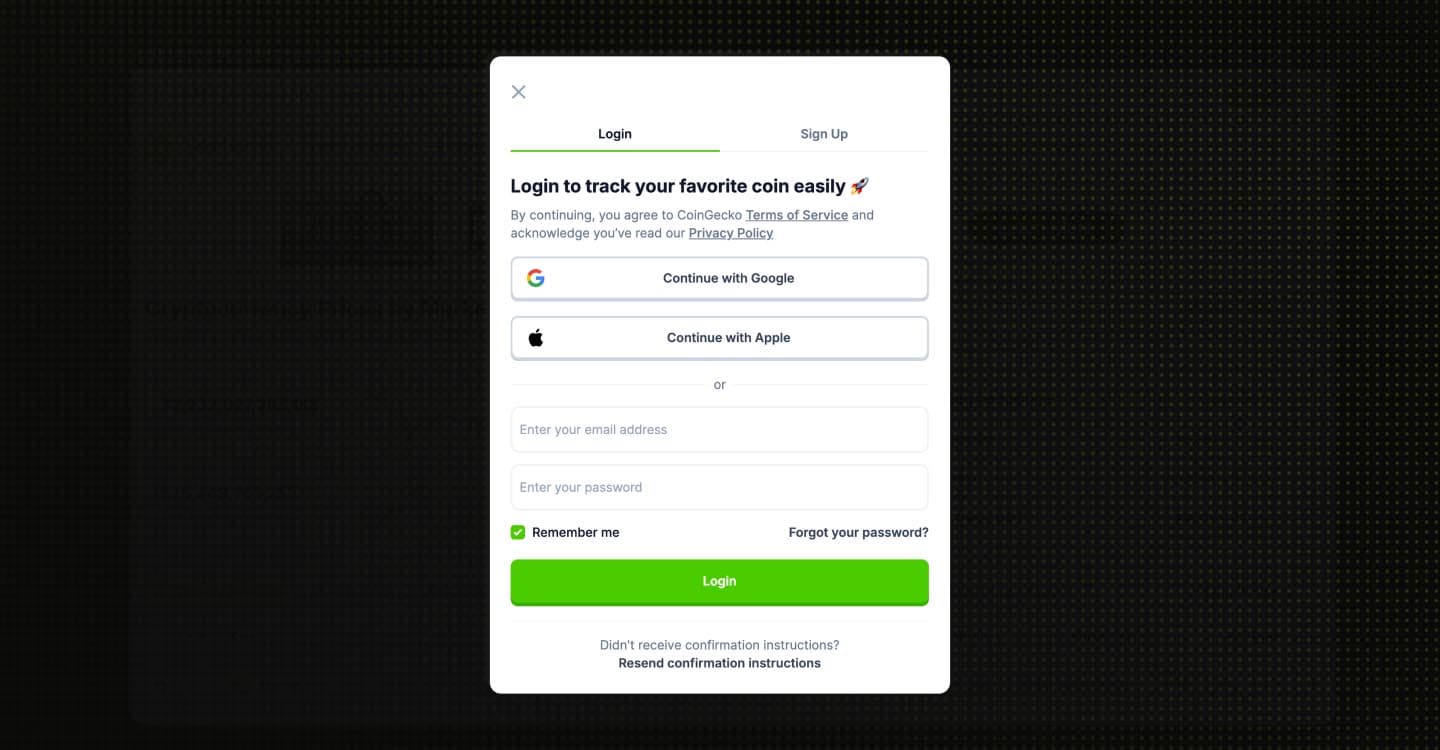
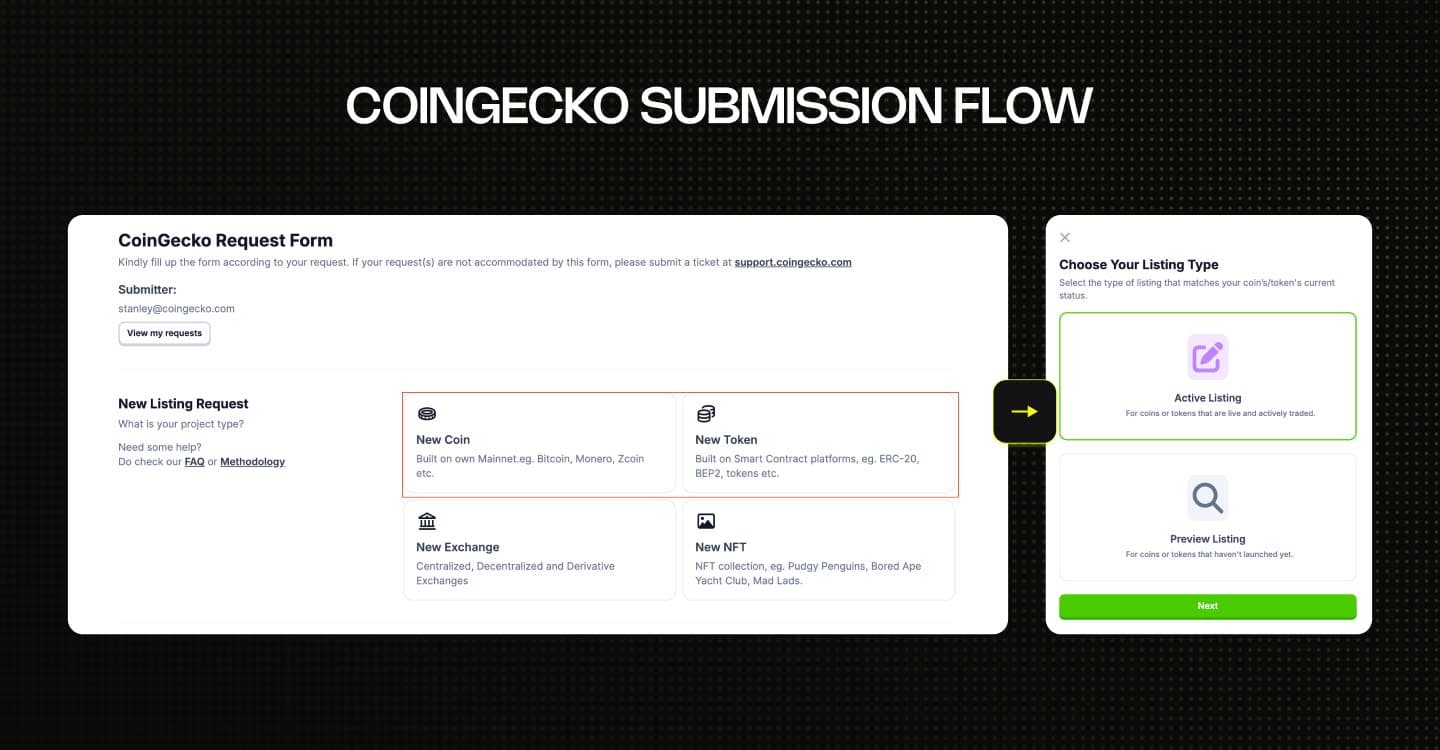
2.Open the Request Form and pick the correct request type. Choose the coin/token listing flow, then select the listing type CoinGecko offers at the time, such as Active versus Preview, and make sure it matches your current trading status and what you want users to see.
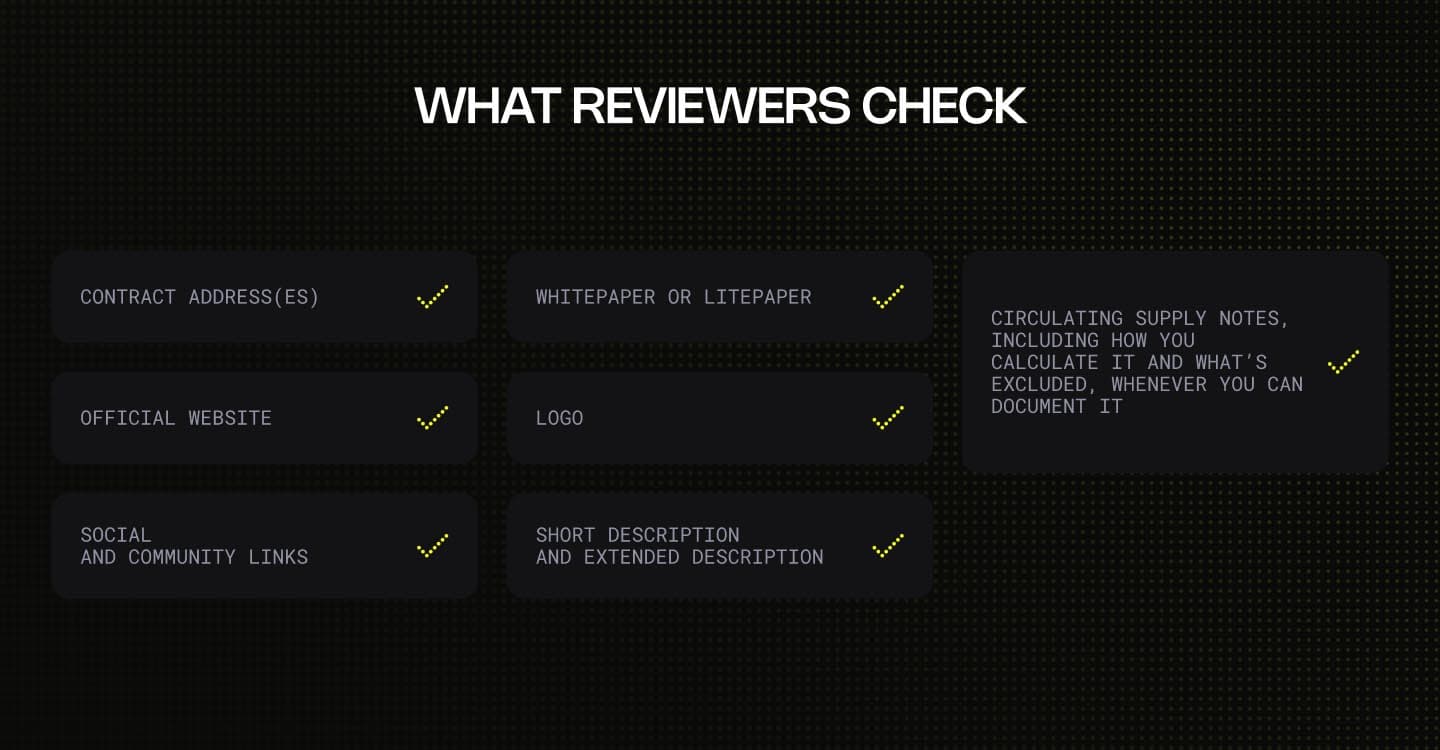
3.Fill it like a reviewer is skimming under time pressure. Completeness beats clever phrasing, so give them what they need to validate the basics quickly:
After you submit, keep it trackable. CoinGecko lets you check the status of your submission here. Standard review is typically 3–5 working days, Fast Pass targets 24 hours, and if you are still waiting after 2 weeks, treat it as a sign the package likely needs tightening before you try again.
Before we leave the form, one field does more work than it looks: your listing description, because it’s the part reviewers and researchers re-read when something feels off.
Reviewers respond best to plain, checkable language that matches what your docs already say. A simple structure that usually reads well under review looks like this:
Most rework here is avoidable: the market is fine, but the wording, links, and supply logic don’t line up tightly enough to survive reviewer skim time. Burning cycles on preventable inconsistencies? This is where a DESH-style audit pays off: one pass that aligns the CoinGecko descriptions with the tokenomics materials and the public links.
Once the form is in, the work shifts to what happens after approval and how you keep the page clean and useful over time
When CoinGecko approves the listing, you get the green check, a link people recognize, and a place the market will keep revisiting. What you do next determines whether that page becomes a stable reference your investors can point to, or a snapshot that slowly drifts out of sync with reality.
Treat the CoinGecko profile like a public control panel. Keep links, descriptions, tags, and basic project details current, because outdated pages create the same doubt as missing pages, and doubt is expensive when you’re in market with a fundraising timeline.
Then keep an eye on what the page is quietly communicating through numbers. If liquidity thins out or trading behavior gets weird, the first place it shows up is the one place everyone shares, which is why teams that take this seriously monitor liquidity and volume patterns and adjust their market-making approach before the page starts looking fragile.
There is also a simple, underused move here that helps both research and community behavior:
Ask your community to bookmark the CoinGecko page and treat it as the default reference. It keeps price context anchored to one clean source instead of bots and screenshots.
If CoinGecko promotions are relevant for your category and stage, it can be worth exploring them once your page is clean and your market picture is steady. The goal is not a one-off spike, it is building the habit that when someone asks “what is this token, really”, your answer is a link that holds up.
After approval, CoinGecko becomes the page people keep reopening, and small market issues show up there before you notice them internally. If nobody owns monitoring and follow-up, routine volatility turns into a fundraising distraction; this is the lane DESH stays in post-listing.
Even with good hygiene, some projects still hit rejection or setbacks on the first attempt, so the next section breaks down the common reasons CoinGecko pushes back and what typically fixes them.
CoinGecko does not publish a single, exhaustive rejection checklist, and reviewers still apply judgment when a project sits in the gray area. What follows are common patterns teams keep running into, based on CoinGecko’s guidance and what comparable projects tend to get wrong in practice.
This is the fastest way to make the page feel untrustworthy, even if everything else looks polished. When the market looks inactive, diligence gets stuck because nobody can tell whether there is real demand behind the token, and “we’re early” is rarely enough once people try to model entry and exit.
You can also get flagged when volume shows up in bursts that never repeat, or when the tape has a cadence that feels engineered. The fix is to earn repeatable activity across days by putting real distribution behind the market, then tightening your venue mix so price discovery has somewhere credible to settle.
If you bring in market-making support, treat it as a structure problem with clear guardrails, since volume that exists mainly to “look good” tends to create review pushback later
This is the one that surprises founders, because it reads like a market problem while it behaves like a product problem. Thin order books and underfunded pools translate into sharp slippage, and that fragility is easy to spot the moment someone tries to run a basic “how much can I buy or sell without moving price” check.
The fix is practical and usually unglamorous: add liquidity where it matters, revisit pair selection, and make ongoing liquidity support an owned responsibility. On AMMs, the same principle applies through pool design and incentives, because you do not want the first real flow to turn into a visible “price jump” story that becomes the default take.
Even when CoinGecko is reviewing markets, they are still reviewing projects. A listing request is easier to trust when the public footprint looks alive and coherent, because real projects tend to have real users talking in public, and that social layer often becomes the tie-breaker when the market data is borderline.
When channels look dormant, duplicated, or abandoned, it creates the impression that the market is moving faster than the project. Start by choosing one or two primary channels you will actually maintain, then use them consistently as the canonical source of updates.
Remove dead links from your site and the form so reviewers are not pushed into stale pages, and build community growth around participation that repeats rather than occasional announcement spikes.
Some pushback has little to do with market behavior and a lot to do with risk exposure, which is why it can feel random when it happens. Trademark conflicts, copycat naming, plagiarized materials, or anything that reads as a brand or IP problem can slow review or end it early, because data indexes do not want disputes attached to listings.
The fix is to remove avoidable triggers before you submit: clean up branding and keep materials original, with a legal posture you can defend in the jurisdictions you touch. If you are borrowing visual identity from another project, assume it will get flagged sooner or later and treat that work as a dependency, not a “nice to have”.
This is where strong markets still get stuck, because reviewers need to be able to validate the fundamentals without guesswork. Inconsistent circulating supply logic, unclear tax settings, or documentation that contradicts what explorers show often leads to rejection, or to a page that stays hard to maintain after it goes live.
Publish a clear circulating supply methodology, label treasury and locked addresses in a way researchers can follow, and keep disclosures aligned across your site and docs. If your token uses aggressive taxes, dialing them toward more standard ranges, such as 3–5%, can reduce follow-up questions later, because extreme settings tend to trigger questions you will keep having to answer.
If you get rejected, treat it as a signal to tighten root causes, then come back with a cleaner package. Many third-party guides still point to a roughly 14-day cool-down, and the practical point holds even when timelines shift, because repeated resubmits without real fixes tend to deepen reviewer skepticism.
This is also where teams realize the work rarely lives in one function. It becomes a coordination problem across market structure, public materials, and ongoing upkeep, which is exactly what the next section is about.
By the time teams reach this section, they usually have one takeaway: listings go sideways when the market setup and the public package get built in parallel, with nobody accountable for keeping them consistent once scrutiny starts. That gap tends to show up at the worst time, when fundraising is already compressing your bandwidth and every follow-up turns into another thread to explain.
DESH takes ownership of that alignment across the parts CoinGecko ends up reflecting. It means liquidity decisions, contract work, site and docs updates, and risk cleanup move as one plan, with one set of priorities, so you are not stitching fixes together right before a resubmission.
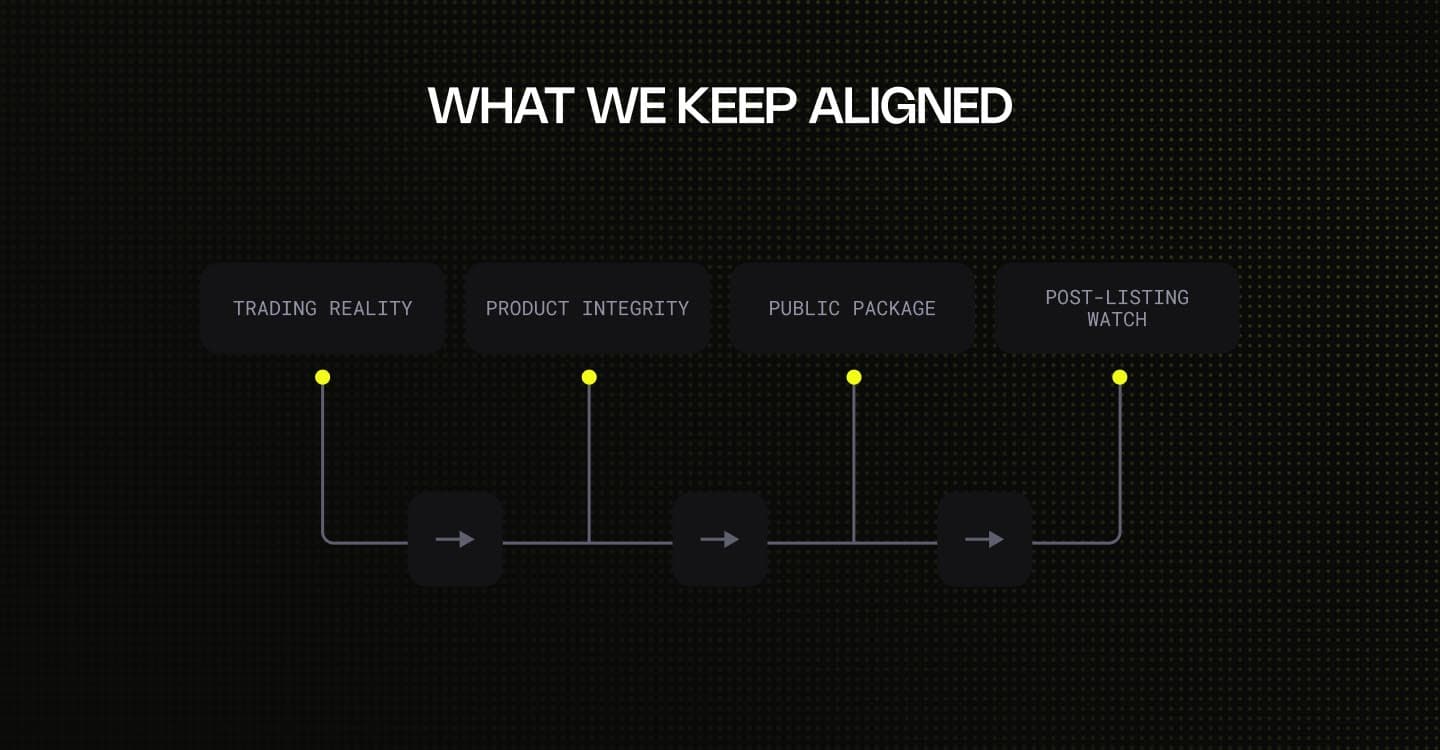
Start from the market. We start with the trading reality and build backward from it. That means tokenomics, liquidity, and exchange coordination are designed to stay defensible across days, including when real flow arrives and someone pressure-tests entry and exit on a call.
Lock the infra to the story. When the surface looks clean, the next failure mode tends to come from product and infra details that drift out of sync with what the project claims publicly. We cover smart contract changes and infra hardening, plus the operational pieces that need to behave when attention spikes, so your CoinGecko profile stays consistent with your own documentation.
Keep the public package coherent. We also own the public surface, from brand and site to CoinGecko-facing docs, with a risk and compliance view grounded in what reviewers and researchers tend to flag. Links stay clean and terminology stays consistent, with a supply methodology people can follow without digging across ten tabs.
Stay on top after approval. After you submit and once you’re approved, we keep watching what the page communicates through the dashboard. We track market health and sentiment, then coordinate adjustments early, before small issues turn into fundraising distractions.
If you want a CoinGecko plan that stays realistic under time pressure, reach out to DESH for a listing and liquidity audit. We’ll tell you what needs to change and, if you want, handle the execution end-to-end in a way that makes outcomes less random by reducing execution fragmentation.